
How to Remove Dog Hair From Car Seats, Carpet & Upholstery (2026 Guide)
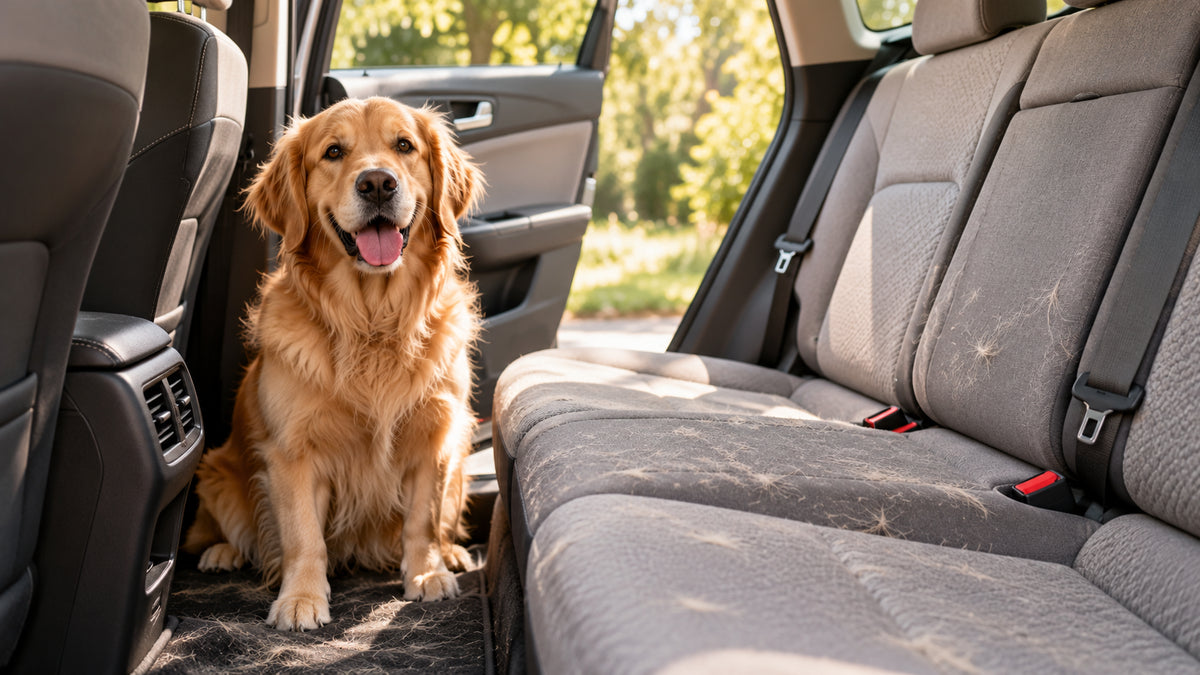
Dog hair in a car is frustrating because it does not behave like normal dust or crumbs. Loose fur can be vacuumed easily, but embedded hair often works its way into cloth seats, carpet, floor mats and narrow seams where suction alone leaves a surprising amount behind.
The good news: the most effective approach is simple. Loosen the hair first, collect it into clumps, then vacuum. That sequence is also consistent with current 2026 car-detailing guidance and with the American Kennel Club’s recommendations for cleaning dog hair from vehicle interiors.
This guide explains how to remove dog hair from car seats, carpet, floor mats and upholstery, which tools work best, what to avoid, and how to keep your car cleaner between trips.
Shop the JollyGoods Pet Hair Remover →
Why dog hair is so hard to remove from car seats
Car interiors are one of the hardest places to clean pet hair because the materials are designed to be durable and grippy. Cloth upholstery and automotive carpet have tightly woven fibers that can hold individual hairs in place. Static electricity adds another layer of cling, especially in dry conditions.
That is why a normal vacuum often removes the loose top layer but leaves behind the strands that have worked into the fabric. Recent detailing guides published in 2026 consistently recommend using friction to loosen the hair before the final vacuum pass.
If your dog has short, stiff hair, the problem can be even more noticeable because those strands can push into the weave like tiny bristles.
Quick answer: the best way to remove dog hair from a car
- Remove seat covers, blankets, crates and floor mats.
- Vacuum loose hair and debris first.
- Use a reusable pet hair remover, rubber brush or slightly damp rubber glove to loosen embedded hair.
- Work in small sections and gather the hair into piles or clumps.
- Vacuum the loosened hair.
- Use a crevice tool around seat seams, rails and edges.
- Wipe hard surfaces with a microfiber cloth.
This method works particularly well on fabric car seats, carpeted floor mats and cargo-area upholstery.

Method 1: Use a reusable pet hair remover on fabric seats
For broad, flat fabric areas such as rear seats, seat backs and cargo-area upholstery, a reusable pet hair remover can be one of the fastest ways to lift fur without going through a roll of adhesive sheets.
Use short back-and-forth strokes rather than long aggressive passes. Work one section at a time and let the tool collect the fur before moving on.
The JollyGoods Pet Hair Remover is designed for reusable everyday cleanup on suitable fabric surfaces. Hair collects inside the built-in chamber, so you can open the compartment, remove the fur and continue cleaning without replacement sticky sheets or batteries.
Best for: cloth seats, seat backs, fabric cargo panels and other flat upholstered areas.
Be careful with: delicate, loose-weave, suede-like or specialty upholstery. Always test a small hidden area first.
Method 2: Use a rubber glove for stubborn embedded hair
A slightly damp rubber glove is a useful low-cost option for areas where hair has worked into the upholstery. The rubber creates friction and helps pull the strands together into clumps that are easier to pick up or vacuum.
Run your gloved hand in one direction across the fabric instead of scrubbing randomly. Once the hair gathers into a small pile, remove it and repeat.
This technique can work especially well on:
- cloth seat bolsters;
- carpeted seat backs;
- floor mats;
- cargo-area carpet.
Keep the glove only slightly damp. Soaking the fabric is unnecessary and can make cleanup more difficult.
Method 3: Rubber pet-hair brush or squeegee
A rubber-edged brush or squeegee can create enough friction to pull hair up from automotive carpet and textured cloth. Pull the tool toward you in short strokes and gather the loosened hair into rows.
This is particularly useful for dog hair in car carpet and floor mats, where a handheld roller may not reach deeply enough into the pile.
On any unfamiliar material, test the tool in an inconspicuous area before cleaning the full surface.
Method 4: Vacuum after loosening—not before and only once
A vacuum is still an essential part of the job. The key is to use it at the right stage.
Start with one quick pass to remove loose dirt and fur. Then use friction—your reusable pet hair remover, rubber glove or rubber brush—to release the embedded hair. After the fur has been pulled toward the surface, vacuum again.
This second pass is often dramatically more effective because the hair is no longer anchored deep in the fabric.
Use a crevice attachment around:
- seat seams and piping;
- seat rails;
- seat-belt buckles;
- door-side gaps;
- the center console;
- cargo-area corners.
Method 5: Remove dog hair from floor mats separately
Take removable mats out of the vehicle before cleaning. This gives you more room to work and keeps loosened hair from moving back onto the seats.
For carpeted mats:
- Shake or tap them outside.
- Vacuum loose debris.
- Use a rubber brush or pet-hair tool to loosen embedded strands.
- Vacuum again.
Rubber all-weather mats are much easier: loose hair can usually be vacuumed or wiped away with a microfiber cloth.
Method 6: Clean seat seams and tight spaces last
Hair tends to migrate into the places you cannot see immediately. After the large surfaces look clean, inspect the seams and narrow gaps.
A narrow vacuum tool, small detailing brush or the included JollyGoods detail brush can help in corners and around trim where the larger roller cannot reach.

Method 7: Wipe hard surfaces separately
Dog hair also collects on dashboards, door panels, center consoles and plastic cargo trim. These smooth surfaces do not require the same friction-based approach as fabric.
Use a clean microfiber cloth or an automotive-safe interior wipe. Work from higher surfaces downward so loose hair falls onto areas you have not finished yet.
What not to do when removing pet hair from car upholstery
A few cleaning habits can make the job harder or risk damaging the interior:
- Do not aggressively scrape delicate fabric. Abrasive tools can roughen or snag upholstery.
- Do not saturate seats before removing the hair. Wet fur can mat together and cling more strongly.
- Do not assume one tool is safe for every material. Cloth, Alcantara-style materials, leather and vinyl need different care.
- Do not ignore the manufacturer’s cleaning instructions. Vehicle-specific guidance should always take priority.
How to remove cat hair from a car
The same basic process works for cat hair: loosen, gather and vacuum. Cat hair can be especially fine and may cling strongly to seats and carpet through static.
For light surface hair on cloth seats, a reusable pet hair remover can be quick. For fine hair trapped in floor carpet, a rubber brush followed by vacuuming is usually more effective.
How to prevent dog hair from taking over your car
The easiest car to clean is the one where fur never reaches every surface. The American Kennel Club recommends regular grooming and using seat covers or crates to help contain hair during travel.
Practical prevention steps include:
- brush your dog regularly, especially during heavy shedding seasons;
- use a washable seat cover or hammock in the back seat;
- keep a dedicated pet blanket in the cargo area;
- vacuum small amounts of hair before they become embedded;
- keep a reusable pet hair remover in the car for quick cleanup after trips.
If your dog rides frequently, a two-minute cleanup after each trip can be much easier than a major interior detail once a month.
Reusable pet hair remover vs. lint roller for car seats
| Feature | Reusable pet hair remover | Sticky lint roller |
|---|---|---|
| Fabric car seats | Good for repeated larger-area passes | Good for small touch-ups |
| Refills | No disposable sheets | Replacement rolls required |
| Embedded hair | Can help lift hair with repeated friction | Usually best on surface hair |
| Large areas | More convenient for repeated use | May require many sheets |
| Storage | Reusable tool | Roll plus spare refills |
For a broader comparison, see Reusable Pet Hair Remover vs. Lint Roller: Which Is Better?.
Best pet hair remover for car seats: what to look for
The best tool depends on the surface. For everyday fabric-seat cleanup, look for something reusable, comfortable to hold and easy to empty. For deep carpet and floor mats, a rubber brush or rake can provide more aggressive friction. For seams, you will still want a small detail tool or vacuum attachment.
That is why a practical car-cleaning kit usually includes:
- a reusable pet hair remover;
- a vacuum with crevice attachment;
- a small detail brush;
- a microfiber cloth;
- a rubber tool for stubborn carpet.
Frequently asked questions
What is the fastest way to get dog hair out of car seats?
Loosen the hair with a reusable pet hair remover or rubber tool, gather it into clumps, then vacuum. This is usually faster than vacuuming the same embedded hair repeatedly.
Can I use a pet hair remover on car seats?
Yes, on many cloth car seats and fabric panels. Test a small hidden area first and avoid aggressive rubbing on delicate or specialty upholstery.
How do I remove dog hair from car carpet?
Use a rubber brush, rubber glove or carpet-safe pet-hair tool to loosen the embedded strands, then vacuum them up. Repeat in small sections for heavy buildup.
Does a lint roller remove dog hair from a car?
It works well for loose surface hair and small areas. For heavily embedded hair, a friction-based reusable tool or rubber brush followed by vacuuming is usually more effective.
What removes short dog hair from fabric seats?
Short, stiff hair often needs more friction than suction. A rubber tool or reusable pet hair remover can help pull the strands toward the surface before vacuuming.
How do I stop dog hair from getting all over my car?
Regular grooming, washable seat covers, pet blankets and frequent quick cleaning help prevent hair from becoming deeply embedded.
The bottom line
If your car regularly carries a dog or cat, the most effective routine is not “vacuum harder.” It is loosen first, gather the hair, then vacuum. Use a reusable pet hair remover for broad fabric areas, rubber tools for stubborn carpet, a vacuum for loose debris and seams, and a microfiber cloth for smooth surfaces.
For quick everyday cleanup of suitable fabric car seats and upholstery, shop the JollyGoods Pet Hair Remover. It is reusable, self-cleaning, requires no sticky refills or batteries, and ships from Florida with free U.S. standard shipping.
For a complete room-by-room guide, read How to Remove Pet Hair From Every Surface: Couch, Carpet, Bedding & Car Seats.
Source: American Kennel Club, How to Remove Dog Hair From Your Car. We also reviewed multiple 2026 automotive-detailing guides when developing the cleaning sequence described above.
Ready for less pet hair?
Meet the JollyGoods Pet Hair Remover for couches, carpets, bedding and fabric car interiors.