
How to Remove Cat Hair From a Couch & Furniture (2026 Guide)
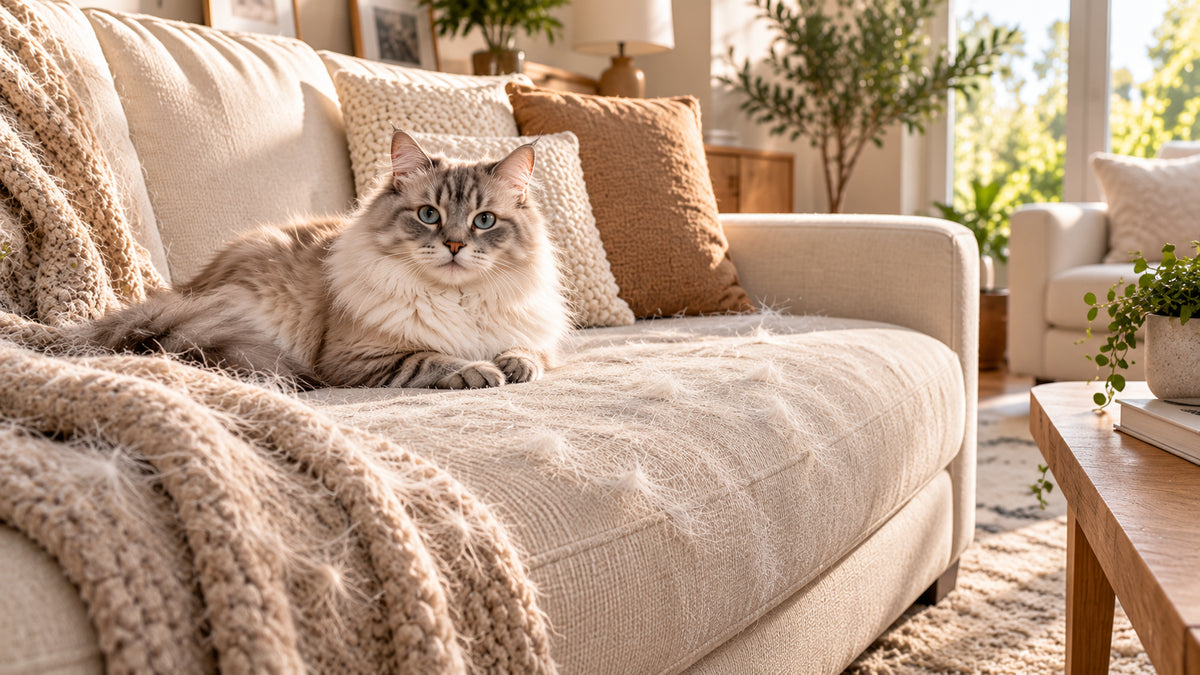
Cat hair has a talent for reaching places your cat barely seems to touch. It settles on sofa cushions, chair backs, blankets, cat trees, bedding and even the clothes you were planning to wear five minutes later.
In 2026, that problem is getting more attention because more people are treating pet-hair cleanup as an everyday home-care task rather than an occasional deep clean. Recent vet-reviewed and pet-care guidance agrees on the basics: regular grooming reduces loose hair at the source, while the best furniture-cleaning method depends on fabric type and how deeply the hair is embedded.
This guide explains how to remove cat hair from a couch and furniture, which tools work best, what to avoid on delicate upholstery, how to reduce cat shedding around the home, and when a reusable pet hair remover is more practical than a sticky lint roller.
Shop the JollyGoods Pet Hair Remover →
Why cat hair sticks to couches and furniture
Cat hair is fine, light and easily moved through the home. On fabric furniture, it can cling through a mix of static electricity, friction and the texture of the upholstery itself. Once hair works into the weave of a couch or chair, a quick vacuum pass may only remove the loose surface layer.
That is why the fastest approach is usually not “vacuum harder.” It is to loosen the hair with friction, gather it into clumps and then vacuum the remaining strands.
Recent 2026 furniture-cleaning guides and a vet-reviewed Catster article both emphasize that rubber tools, lint brushes, reusable rollers and upholstery-safe vacuum attachments are useful because they physically separate hair from the fabric instead of relying only on suction.

Quick answer: the best way to remove cat hair from a couch
- Remove cushions, throws and loose blankets.
- Vacuum loose dust and surface fur.
- Use a reusable pet hair remover, dry rubber glove or fabric-safe rubber tool on broad fabric areas.
- Work in short, overlapping passes rather than aggressive scrubbing.
- Gather loosened hair into piles or clumps.
- Vacuum seams, cushion edges and corners.
- Finish with a microfiber cloth on smooth surfaces.
For heavily covered couches, work one cushion at a time. This keeps loosened hair from simply moving from one part of the sofa to another.
Method 1: Reusable pet hair remover for couch cushions
For broad, flat upholstery such as sofa cushions and fabric chair seats, a reusable pet hair remover can be one of the fastest tools for everyday cleanup.
Use short back-and-forth strokes and let the tool do the work. Avoid pressing excessively hard. The goal is to lift and collect hair, not scrape the fabric.
The JollyGoods Pet Hair Remover is designed for reusable cleanup on suitable fabric surfaces. Hair collects inside the built-in compartment, so you can open it, empty the fur and continue cleaning without adhesive refill sheets or batteries.
Best for: couches, upholstered chairs, cushions, bedding and other flat fabric surfaces.
Use caution on: velvet-like fabrics, loose knits, delicate weaves, highly textured upholstery and any material that pills easily. Always test a hidden section first.
Method 2: Rubber glove for embedded cat hair
A dry or very slightly damp rubber glove is a simple way to lift stubborn cat hair from upholstery. The rubber creates friction against the fabric, helping fine hairs roll together into clumps.
Run your hand in one direction rather than scrubbing randomly. When the hair collects into a line or small ball, pick it up and repeat.
This method works especially well on:
- armrests;
- cushion edges;
- seat backs;
- fabric dining chairs;
- small upholstered benches.
If the couch care label warns against water or moisture, use the glove dry.
Method 3: Vacuum with an upholstery attachment
A vacuum is still essential, but it is often most effective after you have loosened the hair first.
Use an upholstery attachment on the flat surfaces and a crevice tool around:
- cushion seams;
- piping;
- under removable cushions;
- the gap between the seat and backrest;
- along the arms;
- under the sofa.
Fine cat hair often migrates into seams and gaps, so a couch can look clean while still holding a surprising amount of fur in the edges.
Method 4: Lint roller for small touch-ups
A sticky lint roller is still useful for small areas and quick cleanup, especially on clothing, pillows or a small patch of couch before guests arrive.
Its main limitation is efficiency. On a large sofa or a heavy-shedding cat household, disposable sheets can fill quickly. For repeated large-area cleaning, a reusable pet hair remover is usually more convenient.
For a detailed comparison, read Reusable Pet Hair Remover vs. Lint Roller: Which Is Better?.
Method 5: Microfiber cloth for smooth furniture surfaces
Not every piece of furniture needs a roller. On wood, laminate, painted surfaces and smooth leather-like areas, a microfiber cloth is often enough.
Wipe in one direction so the hair gathers instead of spreading. A slightly damp microfiber cloth can improve pickup on hard surfaces, but always follow the furniture manufacturer’s care instructions.
How to remove cat hair from different couch fabrics
Microfiber couch
Microfiber can attract fine hair through static, but it usually responds well to a reusable roller or rubber tool. Work gently and avoid soaking the fabric.
Velvet or plush upholstery
Use extra caution. The direction of the nap matters, and aggressive rubbing can affect the appearance of the fabric. Use a soft upholstery brush or vacuum attachment first, and test any friction-based tool on a hidden area.
Loose-weave fabric
Avoid aggressive back-and-forth rubbing because loops can snag. Use a vacuum attachment and a gentle fabric-safe lint brush instead.
Leather and faux leather
Hair usually stays closer to the surface. A microfiber cloth or vacuum with a soft attachment is often enough. There is no need to use aggressive friction.
How to remove cat hair from blankets and bedding
Blankets, throws and bedding often collect as much cat hair as the couch itself. A good routine is to remove as much fur as possible before washing.
- Shake the item outside if practical.
- Use a lint brush, rubber glove or reusable pet hair remover on flat fabric areas.
- Launder according to the care label.
- Clean the dryer lint filter after each load.
A washable throw placed on your cat’s favorite couch spot can make the whole room easier to maintain because you can clean one layer frequently instead of deep-cleaning the entire sofa every time.
How to remove cat hair from a cat tree
Cat trees can be more difficult because they combine carpet, fabric, sisal and tight corners.
For carpeted platforms:
- vacuum loose hair first;
- use a rubber brush or fabric-safe pet hair tool on flat carpeted sections;
- vacuum again after loosening the fur.
For sisal scratching posts, avoid harsh scraping. A vacuum with a brush attachment is usually the safest first step.
How to reduce cat hair on furniture in the first place
The easiest fur to clean is the fur that never reaches the couch. Purina’s 2026 grooming guidance notes that cats shed naturally and that grooming needs vary by coat type and season. Regular brushing can remove loose hair before it ends up on furniture.
Practical prevention steps include:
- brush your cat regularly;
- increase brushing during heavier shedding periods;
- use washable throws on favorite sleeping spots;
- vacuum furniture before fur becomes deeply embedded;
- keep a reusable hair remover near the couch for quick daily passes;
- wash pet bedding regularly.
If your cat suddenly starts shedding much more than usual, develops bald patches or has irritated skin, talk to a veterinarian. Excessive or unusual shedding can sometimes be associated with health or skin issues.

Reusable cat hair remover vs. sticky lint roller
| Feature | Reusable pet hair remover | Sticky lint roller |
|---|---|---|
| Best for | Couches, upholstery, bedding, larger fabric areas | Clothes, pillows, quick small-area touch-ups |
| Refills | No disposable sheets | Replacement rolls required |
| Heavy cat hair | Better suited to repeated passes | Sheets can fill quickly |
| Large furniture | Convenient for repeated use | Can require many sheets |
| Cleanup | Empty collection compartment | Peel and discard used sheet |
Best cat hair remover for furniture: what to look for
The best tool depends on your furniture, but for everyday use look for something that is:
- reusable;
- easy to empty;
- comfortable to hold;
- effective on broad fabric surfaces;
- simple enough to keep near the couch and use frequently.
For seams and tight corners, a separate detail brush or vacuum attachment is still useful.
A five-minute couch-cleaning routine for cat owners
If you want to keep the sofa under control without turning it into a major project, use this simple routine:
- Minute 1: remove throws and straighten cushions.
- Minutes 2–3: use a reusable pet hair remover on the main seating areas.
- Minute 4: clean armrests, edges and cushion fronts.
- Minute 5: vacuum seams or use a small detail brush.
Doing this every few days is usually easier than waiting until the entire sofa is heavily covered.
Frequently asked questions
What is the fastest way to get cat hair off a couch?
Use a reusable pet hair remover or rubber tool on the flat fabric areas, gather the loosened fur and then vacuum the seams and corners.
Why does cat hair stick to furniture so badly?
Fine cat hair can cling through static and work into the weave or texture of upholstery, making it harder for suction alone to remove.
Does a lint roller work on cat hair?
Yes. It is useful for small areas and quick touch-ups, but large sofas or heavy shedding can use many disposable sheets.
Can I use a pet hair remover on a couch?
Yes on many common fabric couches. Test a small hidden section first and avoid aggressive rubbing on delicate, loose or piled upholstery.
How do I get cat hair out of couch seams?
Use a crevice vacuum attachment, a small detail brush or a fabric-safe narrow tool after cleaning the broad cushion surfaces.
How often should I clean cat hair off furniture?
For a cat that uses the sofa daily, quick cleaning every few days is usually easier than waiting for heavy buildup. During seasonal shedding, you may need to clean more often.
Does brushing a cat reduce hair on furniture?
Yes. Regular grooming removes loose hair before it falls onto furniture. The ideal frequency depends on the cat’s coat type, season and individual grooming needs.
The bottom line
The most effective way to remove cat hair from furniture is to match the tool to the surface. Use a reusable pet hair remover for broad fabric areas, rubber friction tools for stubborn embedded hair, a vacuum for seams and deep gaps, and a microfiber cloth for smooth furniture.
If you want a reusable everyday option for couches, chairs and bedding, see the JollyGoods Pet Hair Remover. It is self-cleaning, requires no sticky refills or batteries, and ships from Florida with free U.S. standard shipping.
You may also like our complete guide: How to Remove Pet Hair From Every Surface, or our couch-focused article: How to Remove Pet Hair From a Couch Without Sticky Rollers.
Sources: Purina, “Cat Shedding: Why Is Your Cat Shedding So Much?” and “Grooming a Cat,” both updated April 2026; Catster, “How to Clean Cat Hair Off a Couch,” updated September 15, 2026; recent 2026 furniture-cleaning coverage from Real Simple and upholstery-care publications.
Ready for less pet hair?
Meet the JollyGoods Pet Hair Remover for couches, carpets, bedding and fabric car interiors.